





The Middle Ages were a period in which daily survival was closely linked to the art of cooking. Between around 500 and 1500 AD, cooking techniques, kitchen utensils and preservation methods developed in remarkable ways – always shaped by social status, available resources and the challenges of a world without refrigerators, thermometers or electric cookers.

What to expect in this article
- Historical context: eras and everyday eating
- Food and social classes: Who ate what?
- Cooking methods and kitchen practices: How was food cooked in the Middle Ages?
- Kitchen utensils and infrastructure: From the stove to the hearth
- Preservation and refrigeration: How food was kept
- Social classes, roles and table manners: Who cooked for whom?
- Further developments until the end of the Middle Ages
- Medieval cuisine in LARP and re-enactment
- FAQ – Frequently asked questions about cooking in the Middle Ages
 Reading time approx. 13 mins.
Key points at a glance:
- Three periods shaped its development: The Early Middle Ages (c. 500–1050) were characterised by simple porridges and open fires; the High Middle Ages (c. 1050–1250) gave rise to specialised professions such as bakers and brewers; and in the Late Middle Ages (c. 1250–1500), the first cookbooks featuring refined techniques appeared.
- Cereals formed the basis of the diet: porridge made from barley, oats and millet, as well as bread made from rye or spelt, were the staple foods for all social classes.
- Meat and fish were a matter of social status: whilst peasants usually only ate meat on feast days, it was served daily in noble households – though over 150 days of fasting a year significantly restricted consumption.
- Cooking techniques relied on controlling the fire: food was cooked in a cauldron over the fire, roasted on a spit or baked in brick ovens.
- Preservation ensured survival: salting, smoking, drying and fermenting were essential for getting food through the winter.
- Social status determined everything: not only what was eaten, but also how ‘refined’ the cooking and serving were, depended on one’s position in society.
Historical context: eras and everyday eating
The Middle Ages span a period of around a thousand years – from the fall of the Western Roman Empire in the 5th century to the dawn of the Early Modern period around 1500. This vast period can be divided into three main phases, each with its own culinary characteristics.
Early Middle Ages (c. 500–1050)
The cuisine of this period was predominantly rural and simple in structure. In the longhouse, families cooked over open central hearths, which served simultaneously to provide warmth, light and a means of food preparation. Omnipresent smoke permeated the living quarters – a side effect that incidentally preserved hanging meat. Written recipes were virtually non-existent; culinary knowledge was passed down orally from generation to generation, mainly among women.
High Middle Ages (c. 1050–1250)
With the flourishing of towns, a more sophisticated food culture emerged. Specialised professions developed: bakers baked rye or spelt bread in communal ovens, brewers produced barley beer as a safe alternative to often contaminated water, and butchers made durable sausages. Monastic kitchens developed into centres of culinary and herbal knowledge, where monks cultivated gardens with sage, parsley, lovage and hyssop.
Late Middle Ages (c. 1250–1500)
This era marks a turning point. The first surviving cookbooks appeared, such as the German ‘Buoch von guoter Spise’ (c. 1350) or the French ‘Le Viandier’ by Guillaume Tirel, known as Taillevent (c. 1375). These texts document refined cooking techniques and sweet-and-sour flavour profiles using imported spices.
Regional differences: Hanseatic port cities such as Lübeck and Hamburg flourished on salted herring and stockfish, preserved with salt from the Lüneburg salt works. Centres in southern Germany and northern Italy utilised their extensive wine-growing for marinades and reductions in haute cuisine.
Ecclesiastical influence: The church calendar had a massive impact on the diet. Red meat was forbidden on over 150 fasting days each year. Fish and vegetable dishes such as pea and cabbage stews took its place. Fish farming thus became an important economic factor.
Food and social classes: Who ate what?

Diet in the Middle Ages was by no means an egalitarian affair. What was served depended fundamentally on social status. The difference between a peasant’s meal and a prince’s banquet was not gradual, but categorical.
Peasantry
- Focus on bread made from rye or spelt; wheat was a luxury item
- Cereal porridges made from barley, oats and millet as the main meal (2,500–3,500 kcal per day for field work)
- Vegetables such as cabbage, turnips and onions, as well as pulses such as peas and lentils
- Meat usually only on festive days, predominantly pork; feet, heads and offal were used to make aspic and stews
- Dairy products and eggs were available, but seasonally dependent
Townspeople and craftsmen
- Regular access to bakery bread, finer than home-baked farmhouse bread
- Cheese, sausages and pickled herring from the market
- From the 13th to the 15th century, market offerings expanded the selection: fruit, nuts and spices from long-distance trade
- Food stalls and taverns offered ready-made meals – a precursor to modern takeaway food
The nobility and court cuisine
- A wide variety of meat: beef, veal, game (deer, wild boar, roe deer), poultry (capon, swan, peacock for ceremonial purposes)
- Exotic spices such as pepper, saffron, cinnamon, cloves and ginger – the price of pepper sometimes rivalled that of gold
- Elaborate multi-course meals with artfully arranged dishes to demonstrate status and wealth
- Sweet-and-sour flavour profiles combining fruit, honey and expensive imported spices
- A dedicated team of professional chefs working in separate kitchen buildings
Monasteries
- Strict dietary rules depending on the order; Benedictines relied heavily on fish from their own ponds
- Frequent abstinence from meat; focus on fish, cheese, eggs and vegetables
- Herb gardens played a central role: sage, parsley, lovage and hyssop
- Fixed mealtimes in the refectory, often with a requirement for silence and spiritual reading
| Status | Typical dish | Main ingredients |
|---|---|---|
| Peasants | Vegetable stew | Cabbage, peas, turnips, occasionally bacon |
| Townspeople | Cereal soup with leek | Barley, leeks, onions, herbs |
| Nobility | Roast pepper with sauce | Game, pepper, wine, saffron |
| Monastery | Fish dish with herbs | Carp, sage, parsley |
Cooking methods and kitchen practices: How was food prepared in the Middle Ages?
The medieval kitchen was a place of smells, smoke and constant heat. In wealthy households, the kitchen was often located in a separate building to keep fire hazards and smoke away from the living quarters. In simple farmhouses, the hearth was the centre of all domestic life.
Cooking in a cauldron
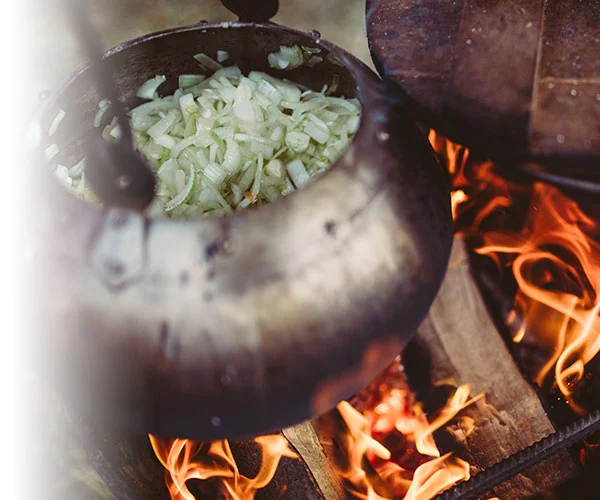
Large iron or bronze cauldrons hung from chains, hooks or swivelling arms over the open fire. This was the main method for soups, stews and porridges. The pots had to be kept constantly filled with liquid to prevent cracking due to thermal shock. In castles, cauldrons could hold up to 50 litres.
Roasting and grilling
Meat was turned on a spit in front of the fire – by hand in simple households, and by kitchen boys in wealthier kitchens. Grills and grates were used for grilling fish and smaller cuts of meat. A common technique was double cooking: first searing, then simmering in stock, before the piece was finally roasted on the spit.
Baking
Brick bread ovens and baking ovens were preheated with brushwood and then swept clean. In villages and neighbourhoods, several households often shared a communal oven. Fixed baking days optimised wood consumption, which accounted for 20–30% of the household fuel budget. Rye bread, cakes and pies were baked in these ovens.
Braising and simmering
Clay pots and iron cauldrons were placed directly in or on the embers. These slow cooking methods were particularly suitable for tough meat and pulses. Braising in embers required patience, but produced tender, thoroughly cooked meat.
Pans and griddles
Iron pans were used for pancake-like batter dishes, egg dishes and fried vegetables. They were heated over tripods or on hotplates in later fireplace kitchens. Cooking in pans could be controlled more precisely than cooking in a large cauldron.
The art of fire control
Regulating the temperature was a genuine skill that required years of experience – by moving the vessels closer to or further away from the flame, adding or removing embers, covering the pots and adding flavourings at just the right moment. Without a thermometer, tasting and visual assessment by the experienced cook were crucial. The smoky flavours produced in this way are now considered characteristic of authentic medieval dishes.

Kitchen utensils and infrastructure: From the hearth to the cooking area

The development of kitchen technology from the early to the late Middle Ages shows remarkable progress. What began as a simple open hearth evolved into specialised kitchen spaces with well-designed infrastructure.
Fire pit and fireplace
In the early Middle Ages, the central open hearth dominated the hall house – the fire burned directly on the floor or on a raised stone slab. Around 1200, brick fireplaces with flues became widespread, significantly reducing smoke inside the building. The fire served a triple purpose: as a source of heat, light and a cooking area.
Cooking utensils
| Utensils | Material | Use |
|---|---|---|
| Hanging cauldron | Iron, bronze | Soups, stews, porridges |
| Clay pots | Ceramics | Braising, acidic foods |
| Skewers | Iron | Roasting meat |
| Frying pans | Iron | Roasting, eggs, pancakes |
| Tripods | Iron | Placing pans and pots over embers |
| Cauldron hooks | Iron | Adjusting the height of the cauldrons |
Smaller utensils included wooden spoons and ladles for stirring and scooping, personal knives on belts, simple wooden chopping boards, and mortars and pestles for processing spices and herbs. Sieves and cloths were used for straining sauces.
Differentiation by social class
Noble kitchens had several hearths, their own ovens, separate storerooms and a large staff – ranging from the head chef to kitchen boys and the cupbearer. From 1400 onwards, middle-class kitchens in towns typically featured compact hearth kitchens with a single main hearth. Peasant kitchens were limited to a single main hearth that served all purposes.
In castles and the homes of the urban gentry, separate kitchen buildings were often found to minimise the risk of fire and keep smoke out of the reception rooms.
Preservation and cooling: how food was kept

In a world without fridges and freezers, food storage was a matter of survival. People in the Middle Ages developed ingenious methods for this, some of which are still used today.
Salting and curing
Meat, particularly pork, was processed into bacon or ham by salting it in brine. Fish – especially herring and cod – was preserved as stockfish, absorbing up to 50% of its weight in salt. The salt trade was a significant economic factor; towns such as Lüneburg and Halle owed their reputation to their salt works. Cured meat and fish could be stored for months or even years.
Smoking
Sides of bacon, sausages and fish were hung in smokehouses or directly above the hearth. The smoke had both a drying and antimicrobial effect. The combination of smoking and salting offered double protection against spoilage. The smoke, which permeated the living quarters anyway, also preserved the hanging meat.
Drying and sun-drying
Cereals, pulses, apples, pears, plums and herbs were dried in the air and sun. Special drying rooms or attics served as storage areas. Roasted cereal groats produced long-lasting porridge bases, which were boiled with water when needed.
Fermentation
Sauerkraut made from white cabbage was produced through lactic acid fermentation – an important source of vitamin C that prevented scurvy in winter. Fermented drinks such as beer, mead and wine had a longer shelf life than fresh juices. Fermentation increased the shelf life of many foods sixfold.
Preserving
Vegetables and fruit were pickled in brine, vinegar or – among the wealthy – in honey or sugar syrup. Examples: pickled gherkins, beetroot, pears in spiced wine. Pickling not only preserved the food but also added variety to the meagre winter diet.
Cooling techniques without a freezer
| Method | Principle of operation | Typical application |
|---|---|---|
| Earth cellar | Constant ground temperature (4–10 °C) | Root vegetables, dairy products |
| Well baskets | Evaporative cooling of the water | Freshly slaughtered meat |
| Clay pots | Evaporative cooling through porous material | Milk, butter |
| North-facing rooms | Shady, cool location | General food storage |
| Thick walls | Thermal mass | Cellars in castles and monasteries |
Social classes, roles and table manners: Who cooked for whom?
In the Middle Ages, the link between social status, the division of labour and dining culture was inextricably close. Who cooked, how people ate and what rules applied at the table – all this was dictated by social class.
Peasant households
Cooking was the responsibility of the women, assisted by children. Eating together from a single bowl was the norm. Bread served as a base (trencher) for food and was subsequently eaten or distributed to the poor. Simple table manners without elaborate ceremonies.
Urban households
In addition to home-cooked meals, food was also purchased from bakers, street food stalls and taverns. Greater variety thanks to market offerings. The first specialisation of professions related to cooking emerged.
The nobility and court cuisine
Professional chefs, kitchen boys, cupbearers and stewards formed a complex culinary staff. Multi-course banquets were displays of power and status. Carving (the artful cutting of meat) was regarded as an art form in its own right. Elaborate presentation of dishes: colourful sauces, gilded pies, show-piece dishes. Strict seating arrangements according to rank; the host sat in a raised position.
Monasteries
Head chefs or cellars were in charge, lay brothers worked in the kitchen and bakery. Fixed mealtimes in the refectory with a duty of silence. Simple but balanced fare in accordance with the rules of the order.
Table manners and cutlery
Knives and spoons were the standard utensils; the knife was often a personal possession, worn on the belt. The fork only became widespread later – from around 1400, initially among the Italian nobility, then slowly spreading northwards. Eating with one’s hands from a loaf of bread or a wooden board was common. Shared drinking vessels were passed around; the drink – be it beer, wine or mead – served as a social bond.
Further developments until the end of the Middle Ages
The spread of cookbooks
The written recording of recipes marked a turning point. Significant manuscripts: ‘Buoch von guoter Spise’ (c. 1350, attributed to Michael de Leone, approx. 100 recipes), ‘Le Ménagier de Paris’ (late 14th century, French household guide) and ‘Le Viandier’ (c. 1375, Taillevent, describes multi-course banquets). From 1475 onwards, the printing press enabled a wider dissemination of these sources, which democratised culinary knowledge.
The rise of exotic spices
Mediterranean and long-distance trade – particularly following the Crusades – brought new flavours to Europe. Pepper, saffron, ginger and nutmeg became highly sought-after among the upper classes. Their high prices turned spices into status symbols. New flavour combinations emerged: sweet-and-sour profiles featuring fruit, honey and hot spices.
The emergence of specialised kitchen spaces
Fireplaces with improved flues became standard in castles and town houses. Separate pantries allowed for better organisation. The kitchen became a specialised workspace with its own staff.
Modern relevance
Many medieval cooking and storage techniques are experiencing a revival today: fermentation is considered healthy and sustainable, ‘nose-to-tail’ cooking aligns with the concept of sustainability, and stews and slow cooking are finding new followers. People in the Middle Ages conserved resources out of necessity – an attitude that is becoming relevant again in times of climate change and food waste.
Medieval cuisine in LARP and reenactment
Anyone who attends reenactment events or cooks at medieval markets literally steps into the same culinary world: open fire pits, iron cauldrons, wooden spoons, the smell of smoke and herbs. For many, camp life and authentic food are the most immersive aspects of the medieval experience.
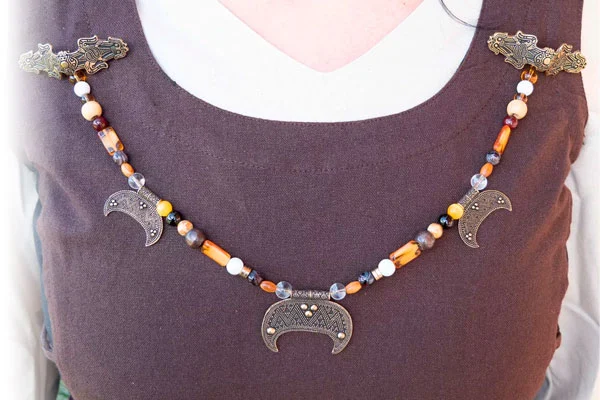
Anyone wishing to fully embody their character – be it a lord of the castle, a monk, a merchant or a peasant woman – needs not only the right attire but also the appropriate kitchen ambience: earthenware pots, herb bags, wooden cutlery and belt accessories.

FAQ – Frequently asked questions about cooking in the Middle Ages
Were there fixed recipes with precise measurements in the Middle Ages?
Early cookbooks such as the ‘Buoch von guoter Spise’ rarely contained exact measurements in grams. Instead, they featured descriptive instructions such as ‘take a little’ or ‘cook until done’. The cook’s practical knowledge and taste were more important than standardised recipes. A typical example: a recipe for almond porridge simply lists the ingredients and the approximate order – not the exact quantities. The experienced cook knew from practice what was appropriate for how many people.
How often was meat actually eaten in the Middle Ages?
The frequency depended heavily on social status. Peasants and ordinary townspeople usually ate meat only on Sundays and feast days, or at weddings and christenings. In noble households, meat was served almost daily. The Church’s fasting rules significantly shaped consumption: meat was forbidden on over 150 days a year. These restrictions encouraged the development of creative fish dishes and vegetarian meals.
Was food in the Middle Ages particularly unhealthy or dangerous?
A nuanced answer is required. The risks included malnutrition during crop failures, a lack of knowledge about germs, and diseases such as ergot (ergotism caused by infected rye grain). On the positive side: many foods were natural and free from artificial additives, whole grains provided fibre, and fermented foods such as sauerkraut supplied important vitamins. The medieval diet was neither consistently dangerous nor consistently healthy – it was pragmatic and adapted to the possibilities of the time.
Could ordinary people in the Middle Ages already enjoy ‘sweet’ foods?
Sweet foods were not reserved for the nobility, although the sweeteners differed. Until the late Middle Ages, sugar remained a luxury product from the Orient. Honey was the main sweetener for all social classes and was available in most regions. Dried fruits such as apples, plums and pears provided natural sweetness for ordinary people too. Simple sweet dishes included, for example, porridge with honey, stewed fruit or sweet gruel with dried apples.
How different were urban and rural cuisines in the Middle Ages?
The differences were considerable. Urban kitchens had easier access to markets and imported goods, regular fresh bread from the baker, and food stalls as an alternative to cooking at home. Rural kitchens were dependent on home-grown produce, baked dark bread only once or twice a week, and experienced seasonal fluctuations more acutely. To give a concrete example: the town dweller bought fresh wheat bread from the baker in the morning, whilst the farmer baked loaves of rye at the communal oven every seven days; these became hard by the end of the week and had to be soaked in soups.


