

Legend depicts the Vikings primarily as warriors, seafarers and conquerors – men with weapons in their hands who set out from Scandinavia to Russia, France, Germany and England. Even the Normans, who conquered England in 1066, traced their lineage back, via their leader Rollo, to Vikings who had settled in northern France some 150 years earlier. Yet these ancestors were also family men, traders and farmers who led perfectly ordinary lives.
What to expect in this article
- Key findings at a glance
- Introduction: Vikings, everyday life and the ‘toilet’
- Archaeological sensation: Denmark’s oldest Viking toilet
- Where the Vikings really went to the loo: stable, pit or outhouse?
- What did a Viking toilet look like – and how was it used?
- What faeces reveal about the Vikings: diet, parasites and the environment
- From Viking toilets to modern toilets: their place in the history of hygiene
- Frequently asked questions about Viking toilets (FAQ)
 Reading time approx. 8 mins.
Key findings at a glance
- Despite the lack of a standardised toilet system, the Vikings certainly valued hygiene – depending on their social status and location, they used holes in the ground, stable areas or covered latrines.
- What is thought to be Denmark’s oldest known toilet dates from the Viking Age and was discovered in the municipality of Stevns in south-east Denmark – a hole around two metres deep which, according to analyses, contained human excrement.
- Faecal remains are a unique archive for archaeologists: pollen, parasites and food residues reveal more about the diet and daily life of the Norse than many a sword or shield.
- The Vikings did not use modern toilet paper – instead, they used moss, grass, scraps of cloth or wool, and smooth wooden sticks.
- Other cultures, such as the Sumerians in what is now Iraq or the Romans, were well ahead of the Vikings when it came to sanitation.
Introduction: Vikings, everyday life and the ‘little room’
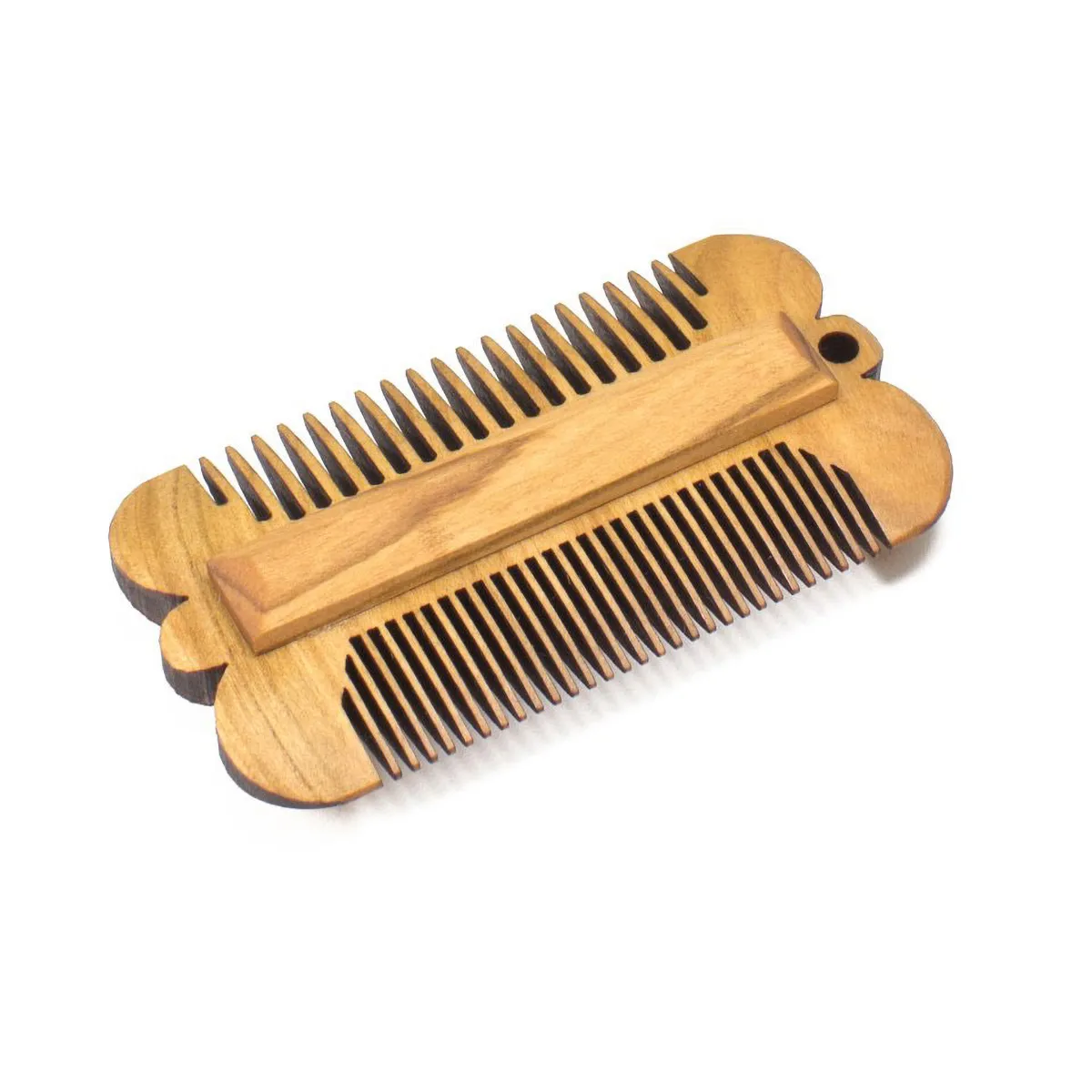
Archaeological finds reveal numerous hygiene items such as combs and razors – personal hygiene was certainly valued by Nordic men, and Vikings were considered comparatively well-groomed for their time. However, there is one topic that is usually given short shrift, even in educational programmes such as ‘Terra X’: where and how did the Northmen relieve themselves?
The Viking Age spanned from around 793 to 1066 AD and included settlements such as Haithabu, Birka, Ribe and Kaupang. It is precisely finds of latrines, pits and faecal matter that help to reconstruct everyday life beyond battles and raids – a topic that is surprisingly revealing.
Archaeological sensation: Denmark’s oldest Viking toilet
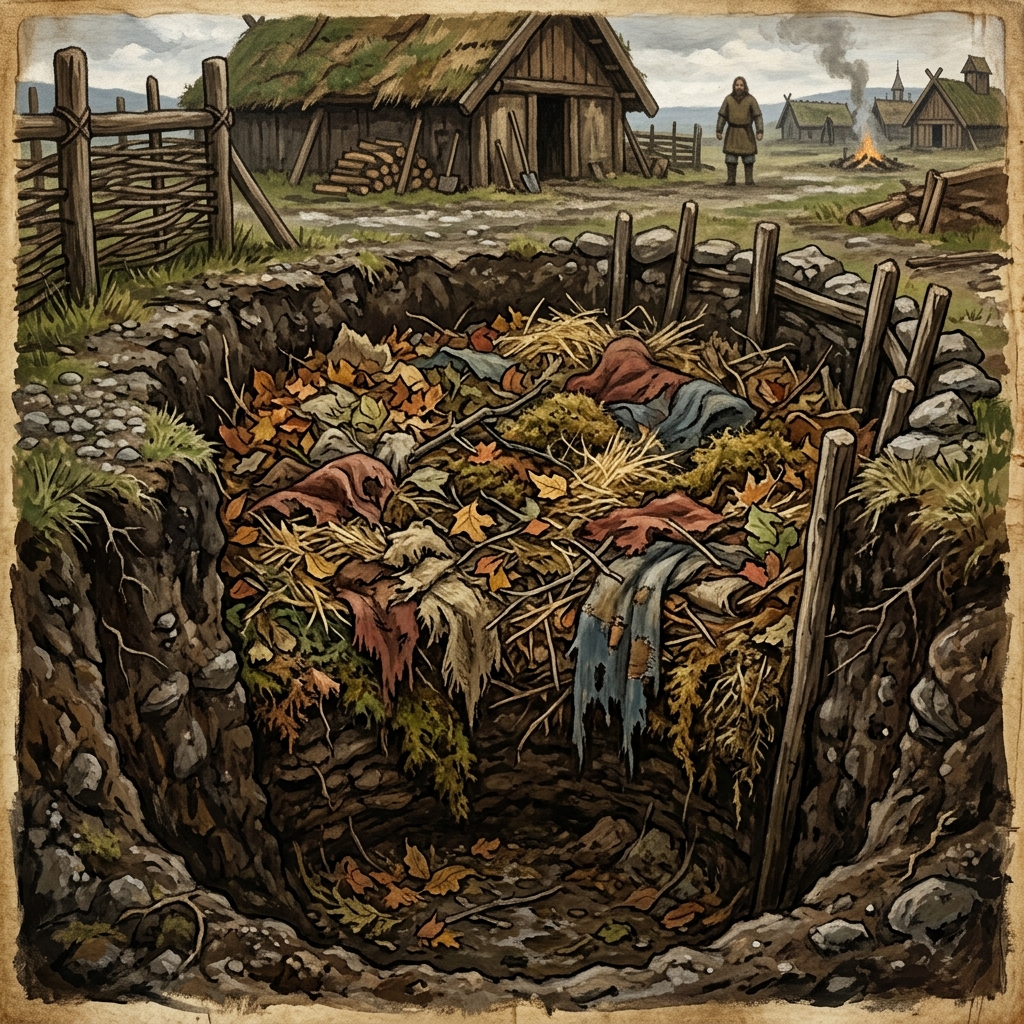
In the municipality of Stevns on the island of Zealand, archaeologists from the Museum of South-East Denmark, led by Anna S. Beck, made a spectacular discovery: During excavations at a farmstead called Toftegård in the village of Strøby, they documented a vertical hole around two metres deep, filled to the top with organic material. Initially, it was thought to be a so-called pit house, a semi-subterranean workshop – but closer examination revealed that it was something entirely different. Analyses confirmed that the contents consisted of human excrement, not an ordinary stable or manure pit.
Radiocarbon dating and pollen analyses clearly date the lowest layer to the Viking Age. Two post holes found at the site suggest that a free-standing wooden hut once stood above the pit – a simple structure with walls and, presumably, a roof. The high concentration of mineralised seeds, pollen and fly pupae in the layer fits this picture perfectly: The strikingly high pollen content probably came from honey, which was used as human food rather than animal feed – an indication that these were indeed human remains rather than animal remains.
This discovery challenges previous assumptions. It was long assumed that Vikings mainly relieved themselves in the stables amongst the animals or simply outdoors. It is now clear that permanent, built-over toilet facilities also existed in rural areas – probably even more frequently than previously recognised, as organic material often decomposes without a trace over the centuries.
Where did the Vikings really go to the loo: a stable, a pit or an outhouse?
Toilet habits varied greatly depending on social status, type of settlement and region. In the countryside, Vikings often simply used the great outdoors. In many places, stables also served as a place to relieve oneself – with human and animal waste ending up in the same manure pit. This was practical for later fertilising the fields, but from today’s perspective it raises hygiene concerns.
In larger settlements, however, archaeologists have found proper latrines: simple, dug-out pits behind the longhouses, occasionally lined with wooden planks. In densely built-up trading centres such as Haithabu or Ribe, there was less space available, which is why permanent latrines with drainage channels leading towards bodies of water were presumably used more frequently here. Toilet-like structures have also been discovered in the Viking towns of York and Dublin – for example, during the famous excavations at Coppergate in York, well-preserved latrine pits, complete with their contents, were found, thanks to the damp, oxygen-poor soil conditions in the city.
On board the famous longships, the situation was different: there is no archaeological evidence of fixed, built-in toilets. During voyages that often lasted for months, seafarers probably relieved themselves over the railings or into buckets, which were subsequently emptied into the sea. Chamber pots or simple wooden vessels in homes are also conceivable, although such vessels are rarely preserved archaeologically.
The excrement from stables and pits could also be used as fertiliser – a pragmatic cycle that closely linked life on the farms to food production.
What did a Viking toilet look like – and how was it used?
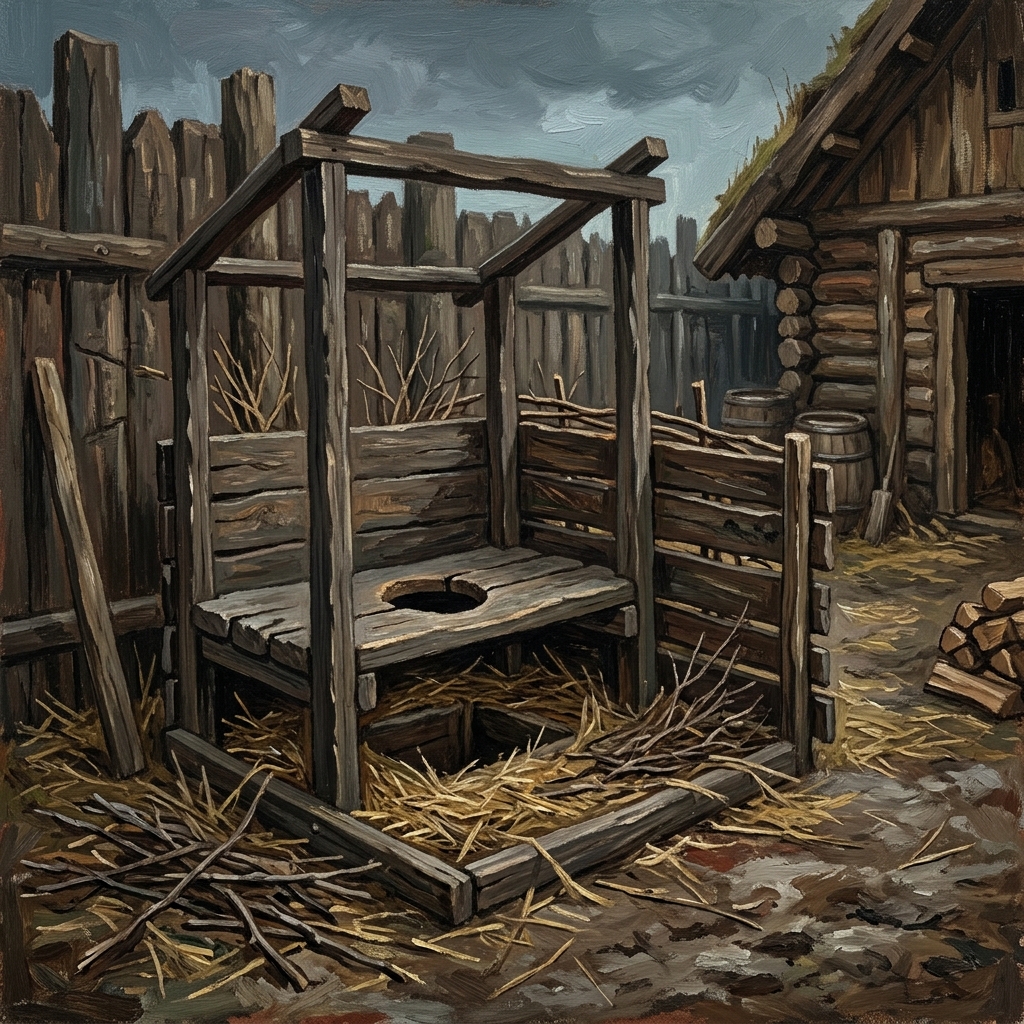
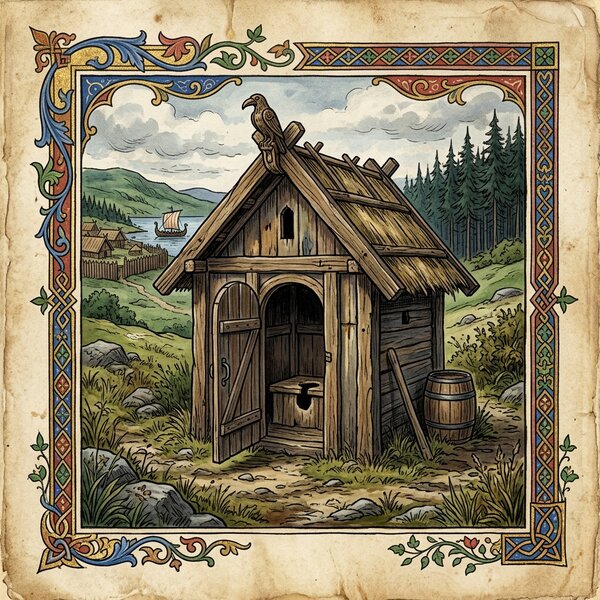
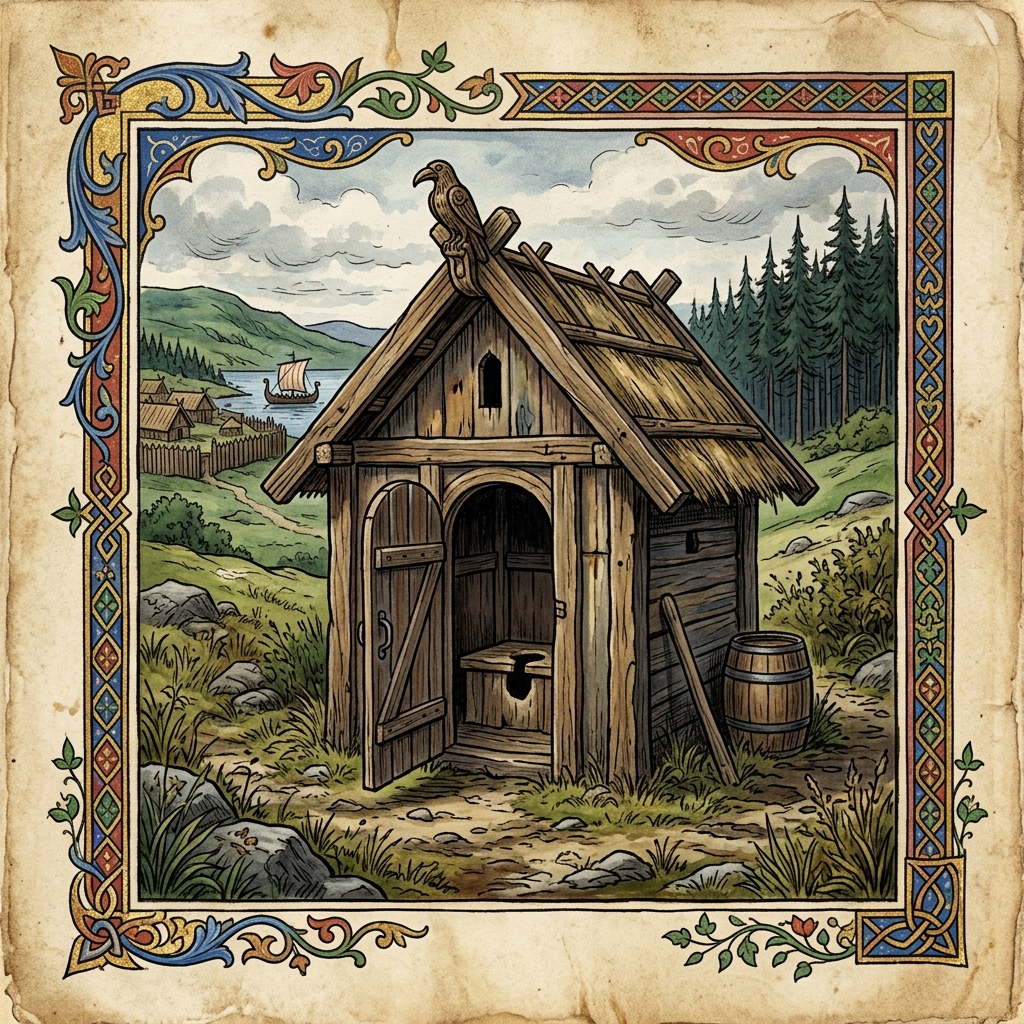
Without running water, Viking toilets were organised in a very simple way. The structure usually consisted of a seat with a hole, mounted on a wooden frame over a pit. In wealthier households, there may have been enclosures made of wattle and daub, along with a curtain or a simple wooden door. Straw or brushwood was often laid on the floor. Elaborate ceramic bowls, such as those known from Roman times, were nowhere to be found among the Vikings.
In latrines, excrement was often covered with earth, ash or peat to reduce damp and odour. In winter, the latrine was cold and draughty; in summer, flies buzzed about – indeed, some of the finds from Stevns actually consisted of fly pupae.
The Vikings were unfamiliar with modern toilet paper. Instead, they used moss, tufts of grass, animal wool or smooth wooden sticks. Scraps of cloth or linen and leaves were also used. As is well known, the Romans used sponges on sticks, but there is no archaeological evidence of this among the Vikings. Everyone made do with whatever was available at the time.
Whether one sat or squatted depended on the design of the latrine: simple pits required squatting, whilst permanent latrines with a fixed seat allowed for more comfortable sitting – particularly in larger, central settlements.
What faeces reveal about the Vikings: diet, parasites and the environment
Faecal samples from latrines are now analysed using microscopy, DNA analysis and pollen studies. Evidence of parasite eggs dating from around 750 to 800 AD has been found in Ribe, Denmark’s oldest urban settlement – including whipworms, roundworms, tapeworms and the liver fluke Fasciola hepatica. These ‘roommates’ point to contaminated water, close coexistence with animals and poor hand hygiene.
The Vikings’ diet was more varied than the cliché of meat and mead would suggest: cereal pollen from barley, rye and oats, plant remains from cabbage, leeks and pulses, as well as fish bones, provide evidence of a varied diet. High concentrations of certain types of pollen also allow conclusions to be drawn about seasonal use and the surrounding fields. Such studies help to tell the story of the Vikings in a sober, data-driven way – as an insightful complement to the well-known sagas.
From Viking latrines to modern toilets: a place in the history of hygiene
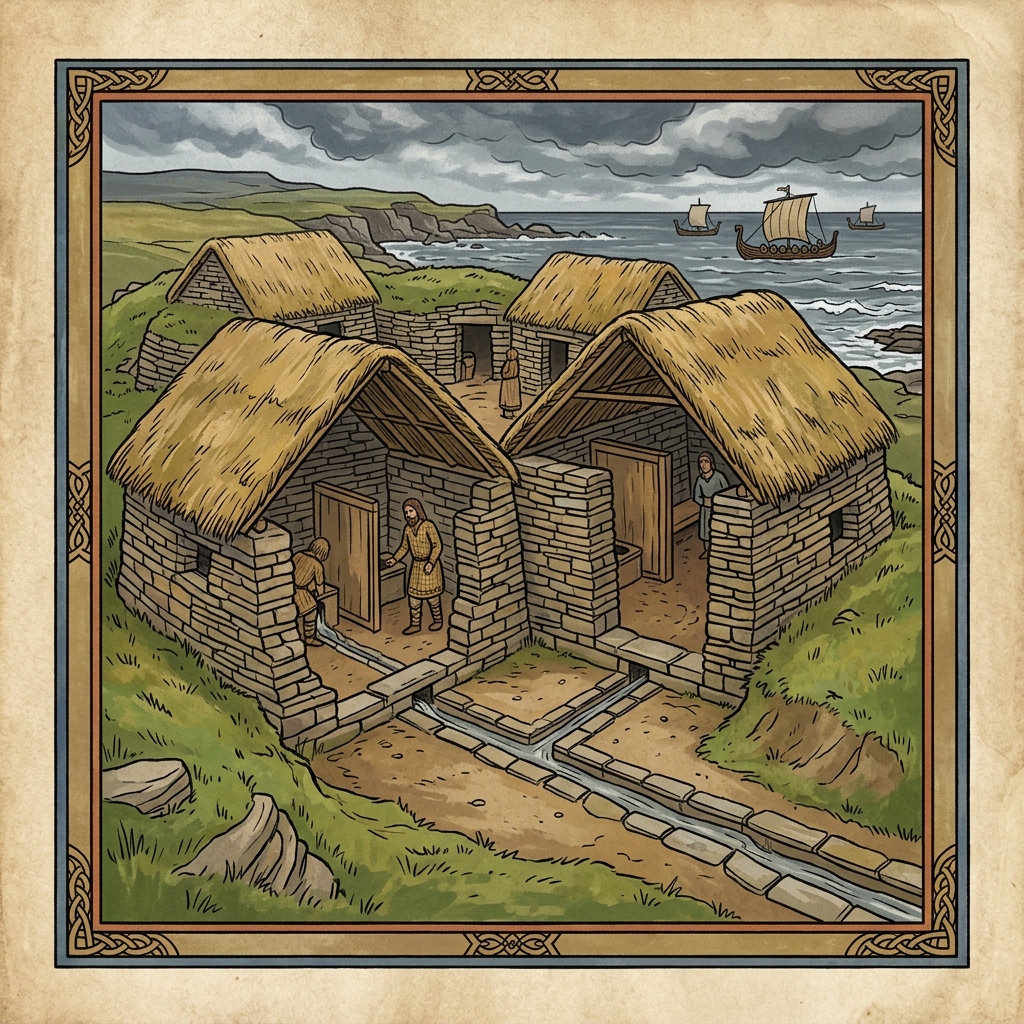
Compared to other cultures, the Vikings were rather behind the times when it came to sanitation. In Skara Brae on the Orkney Islands in Scotland, as early as around 5,000 years ago, there were small rooms connected to a communal drainage system that served as latrines and could be flushed with water. In what is now Iraq, around 4,000 years ago in ancient Ur, wealthy households used clay pipes beneath stone seats through which water flushed waste into sewers. On Crete, too, the Minoan palaces featured sophisticated sewage systems. Finally, in ancient Rome, there were public latrines with space for as many as 50 to 60 people at a time – a world of communal yet technically sophisticated sanitary facilities that was alien to the Vikings.
Following the collapse of the Western Roman Empire, much of Europe experienced a regression in sanitation technology. In the Middle Ages, simple solutions predominated: castles with protruding ‘toilet towers’, basic urban pit latrines and open sewage channels running alongside the streets. It was not until 1596 that the English courtier Sir John Harington described the first functioning flush toilet, albeit with significant shortcomings in terms of odour containment. It was not until 1775 that the Scotsman Alexander Cumming made a decisive improvement to the principle by introducing the siphon, which reliably trapped sewer gases – the true cornerstone of the modern toilet.
Toilet paper, as we know it today, is a relatively recent branded product; for a long time, newspaper or similar materials served as substitutes. Every year on 19 November, the United Nations’ World Toilet Day is observed, serving as a reminder that several billion people worldwide still lack access to basic, safe sanitation. The Vikings would probably have gazed in amazement at a modern city with a sewerage system – yet their legacy lives on in the latrines, which archaeologists continue to study to this day using state-of-the-art technology.
Frequently Asked Questions about Viking Toilets (FAQ)
Did all Vikings have access to a permanent toilet?
No. Permanent, covered latrines were more common in larger settlements and wealthier households. Ordinary people in the countryside mostly used makeshift pits, areas near stables or simply the open air. Social status was a key factor in determining how comfortable the toilet facilities were.
Were there special ‘ship’s toilets’ on board the longships?
There is no archaeological evidence of permanent on-board toilets. Sailors and warriors probably relieved themselves over the railings or into buckets that were emptied into the sea – an unhygienic but, on voyages lasting months, probably unavoidable part of daily life.
Did Viking settlements smell particularly strongly of faeces?
Odours were omnipresent due to the lack of a sewerage system, but they mingled with the smells of stables, smoke and fish. This was not a specific ‘Viking problem’, but a very common phenomenon in early medieval Europe.
Was Viking faecal matter deliberately used as fertiliser?
There is much to suggest so. Manure from animal pits, mixed with human excrement, was spread on the fields. This increased crop yields, but at the same time could spread parasites – a cycle that was not fully understood until centuries later.
Why are modern researchers so keenly interested in ancient latrines?
Latrines are a unique archive: they provide information on diet, the environment, diseases and everyday habits all at once. Particularly in the case of a culture such as the Vikings, who left behind hardly any written records of their own, such finds are indispensable – more revealing than many a heroic saga.


Letters from the trading house
New arrivals, market dates and offers, straight from Rinchnach. Unsubscribe any time with one click.
Subscribe to the newsletter

